Forefoot Pain
"Metatarsalgia" is shorthand for ball-of-foot pain, but it's not a diagnosis. It's a symptom with several possible causes.
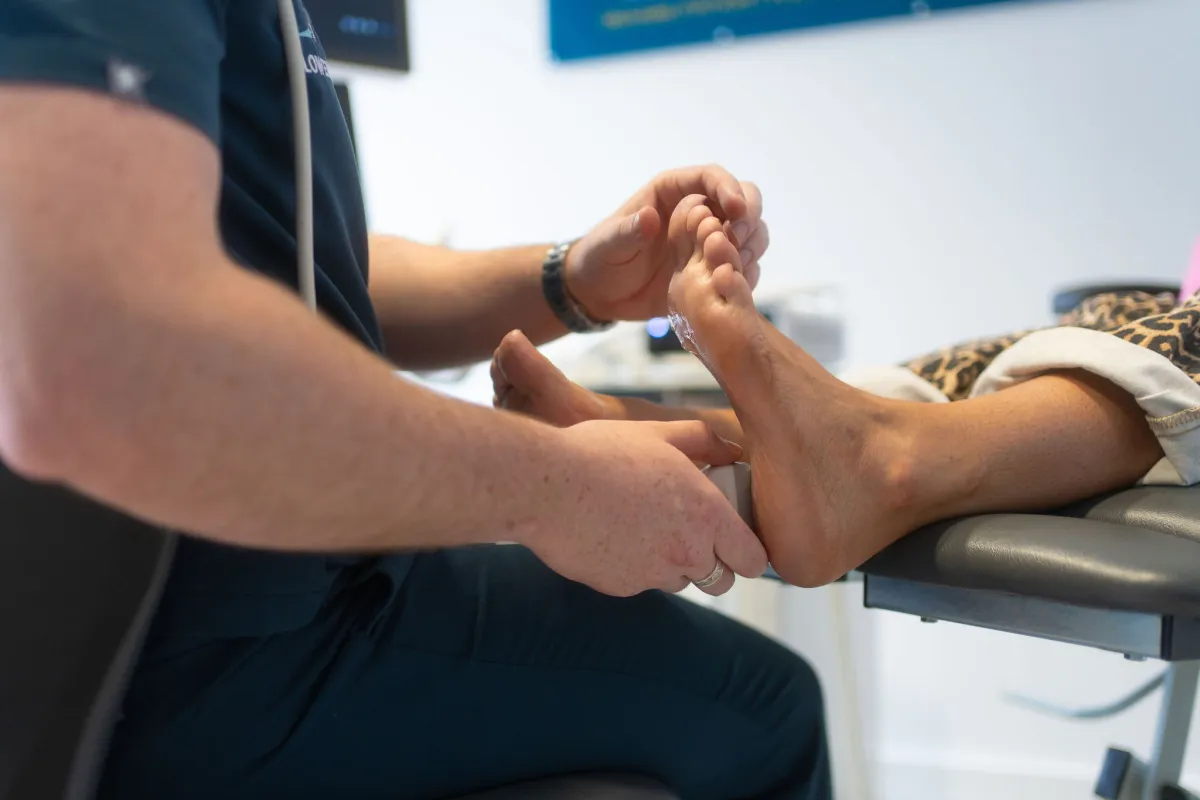
On-site ultrasound and clinical assessment differentiate capsulitis, neuroma, sesamoiditis, plantar plate injury, stress reaction, and biomechanical metatarsal overload.
Forefoot pain has many causes: getting the right one matters
"Metatarsalgia" literally translates as "metatarsal pain", which means it's a description of where it hurts, not what's causing it. The same symptoms can be caused by:
- Capsulitis / plantar plate injury: damage to the joint capsule under a metatarsal head
- Morton's neuroma: interdigital nerve thickening (see Morton's page)
- Sesamoiditis: inflammation of the small bones under the big toe joint
- Stress reaction / fracture: bone stress from repetitive load (see stress fractures)
- Biomechanical overload: a single metatarsal head taking too much load due to gait pattern, foot type, or footwear
- Bursitis: inflammation of the bursae between metatarsals
Each of these has different treatment. This is why imaging and a structured assessment matter. Generic "metatarsalgia" advice often fails because it isn't targeted.
Common symptoms
We diagnose the cause, not just the location
Our Diagnostic Injury Assessment uses on-site ultrasound and structured clinical examination to identify the specific cause of your forefoot pain. The treatment pathway is then matched to that diagnosis: orthotics for biomechanical overload, injection for capsulitis, surgical referral for plantar plate tears, imaging escalation for stress fracture, and so on.
Diagnostic Injury Assessment
45 minutes · €160. Ultrasound, gait analysis, hands-on assessment, defined treatment pathway.