Nail surgery: end the cycle of ingrown toenails
For patients with persistent or recurrent ingrown toenails that haven't resolved with conservative care, surgical correction with phenolisation offers a lasting solution.
Performed under local anaesthetic, using the same phenolisation protocol we use in our Belfast clinics.
Dublin availability: Nail surgery is not on the Dublin online diary yet. Email hello@lower-limb.com to ask about Dublin dates, or book it at our Belfast clinics on lower-limb.com. If you are not sure what you need, a Diagnostic Injury Assessment can be booked online.
If conservative care hasn't worked
Most ingrown toenails respond to conservative treatment: careful nail cutting, footwear adjustment, antiseptic care. Surgery is for cases that don't resolve, that recur repeatedly, or where the nail pathology is severe enough that conservative care isn't going to fix it.
- Recurrent ingrown toenails despite conservative treatment
- Severely curved or distorted nails (involuted or pincer nails)
- Chronic infection or granulation tissue at the nail edge
- Pain that interferes with walking or sport
- Patients who want a definitive, permanent fix
A lasting result
Phenolisation following nail avulsion gives a near-permanent result for the affected nail border. Most patients never need the procedure again on the treated toe.
A two-appointment process
Pre-surgical assessment first, then the procedure. Both happen at the Dublin clinic at 188 Clontarf Road.
Pre-Surgical Assessment
We confirm that nail surgery is the right option for you, take a full medical history, assess vascular and neurological status in the affected toe, and discuss the procedure, anaesthetic, recovery and aftercare.
- Confirm surgical suitability
- Vascular and neurological assessment
- Discuss procedure, recovery, aftercare
- Schedule the surgery date
The pre-assessment fee is typically deducted from the surgery cost.
Nail Surgery
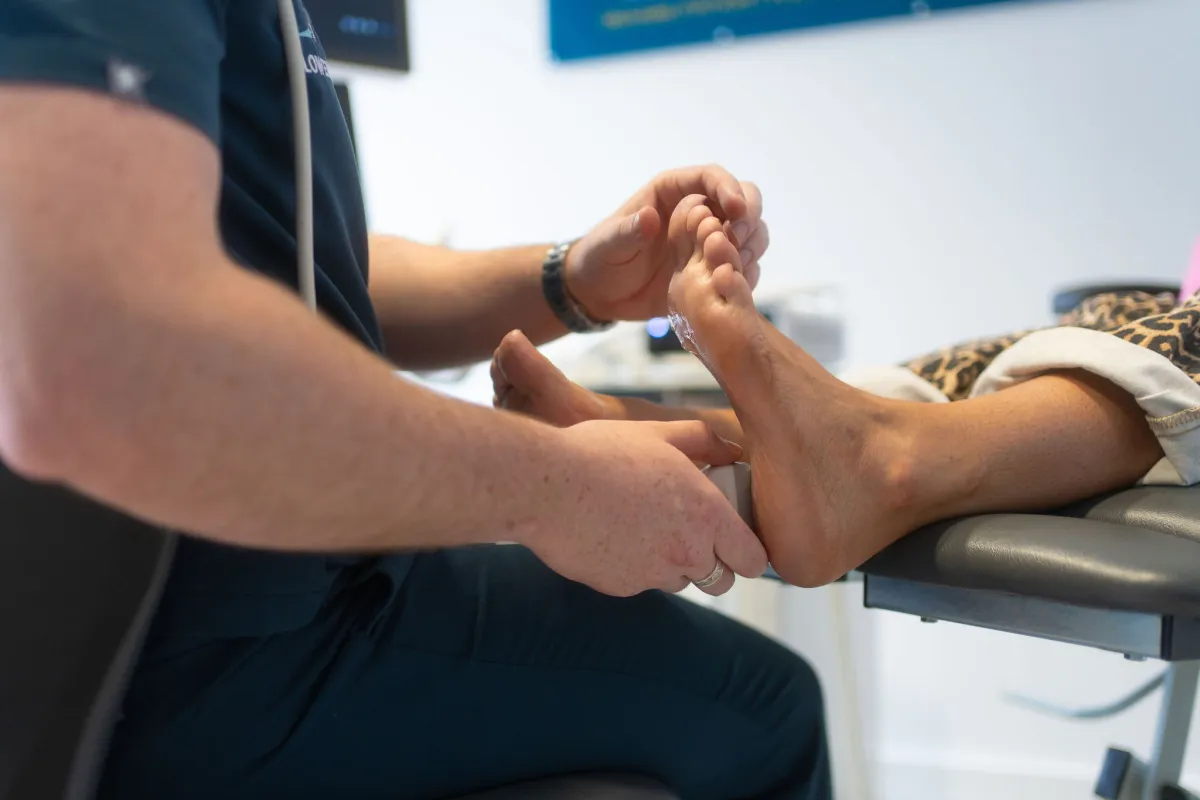
Local anaesthetic to the toe, partial or total nail avulsion (depending on prescription), then phenolisation of the nail matrix to prevent regrowth. Dressed and aftercare provided.
- Local anaesthetic: pain-free during procedure
- Partial or total nail avulsion as prescribed
- Phenolisation prevents regrowth
- Sterile dressing & written aftercare
- Post-op review included
What recovery looks like
Days 1–3
Rest the foot. Daily dressing changes following written instructions. Most patients are off work 1–3 days depending on occupation.
Week 1–2
Walking comfort returns gradually. Roomy footwear and continued dressing changes. Avoid high-impact activity, swimming, or prolonged immersion.
Week 3+
Most patients return to full activity. Post-operative review is included to confirm proper healing. Phenolisation prevents the treated edge from regrowing.
Some patients are not suitable candidates
Patients with poor circulation (arterial disease), poorly-controlled diabetes, or specific clotting/wound-healing concerns may not be candidates for in-clinic nail surgery. Your pre-surgical assessment exists specifically to identify this safely. We'd rather not proceed than proceed with uncertainty.
Frequently asked questions
Does it hurt?
The procedure itself is performed under local anaesthetic. Most patients feel only the initial injection. Once the anaesthetic is in, the surgery is pain-free. Some discomfort is normal once the anaesthetic wears off; standard over-the-counter pain relief is sufficient for most patients.
How long does the procedure take?
The surgical appointment is approximately 45 minutes. The cutting and phenolisation itself is quicker: most of the time is anaesthetic onset, dressing, and aftercare instruction.
Can I drive home afterwards?
Most patients drive themselves to and from the appointment. The local anaesthetic doesn't affect your ability to drive. If you're feeling lightheaded or anxious, arrange a lift, but it's not a clinical requirement.
Will the nail grow back?
The point of phenolisation is to prevent regrowth of the treated nail edge (or whole nail, if total avulsion was prescribed). Phenol is the most widely used and best-studied way of stopping regrowth, and recurrence on the treated edge is uncommon. If a spike does regrow, it can be re-treated.
Will my toe look the same?
After a partial avulsion the nail simply looks narrower. Most people don't notice. After a total avulsion the nail bed is exposed, and over time fills in with skin rather than nail. Most patients prioritise being pain-free over cosmetics, but cosmetic outcomes are discussed at pre-assessment.
Is this covered by insurance?
Partly, on most plans. Nail surgery here is an outpatient clinic procedure, so it claims under the day-to-day chiropodist/podiatrist visit benefit on Irish plans (VHI, Laya, Irish Life Health) rather than the hospital side of your policy: expect a set amount or percentage back per visit, not full cover. No pre-authorisation is needed for day-to-day claims, and 20% tax relief can apply where your GP advised treatment. Full details on our Health Insurance page.