Morton's Neuroma
Burning pain or "pebble in the shoe" sensation in the ball of the foot, most commonly between the third and fourth toes.
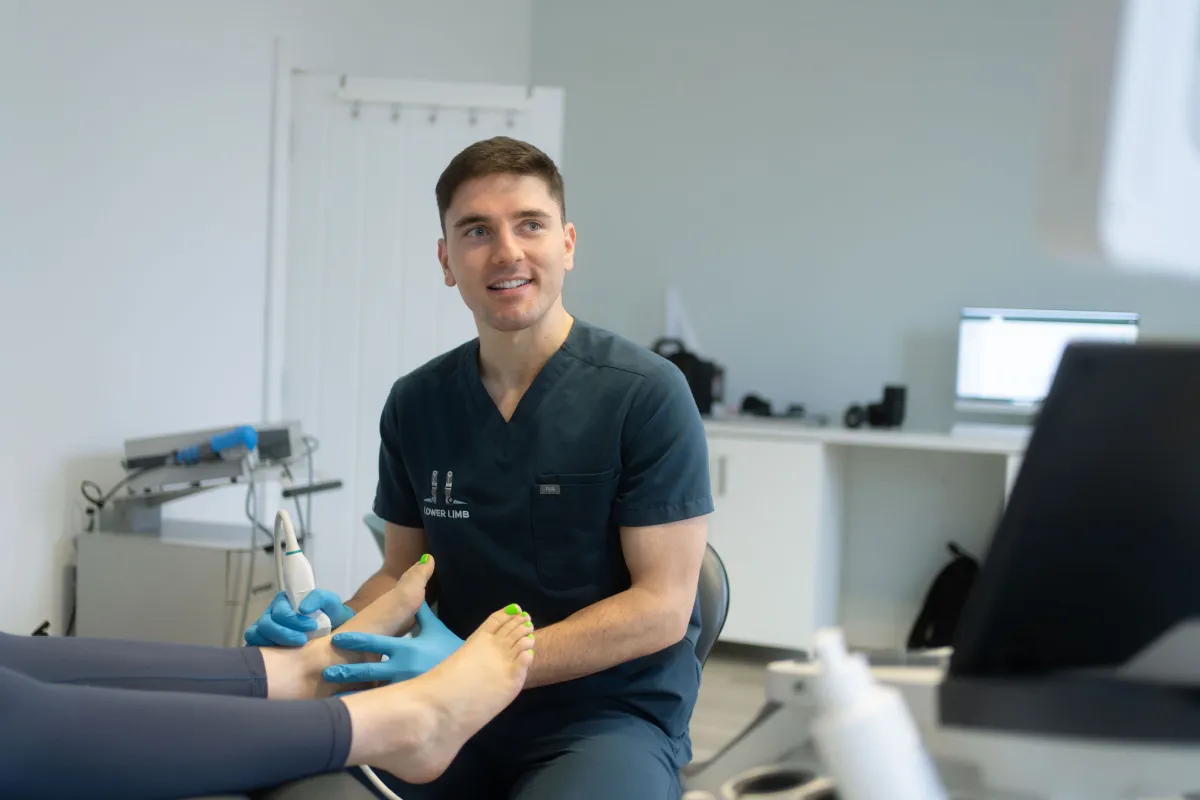
We can image the neuroma directly with ultrasound during your assessment, confirming the diagnosis and measuring its size.
What Morton's neuroma is
Despite the name, Morton's "neuroma" isn't a true tumour. It's a thickening (perineural fibrosis) of the interdigital nerve between the metatarsal heads, most commonly between the third and fourth toes, sometimes between the second and third.
The classic symptoms: burning pain in the forefoot, numbness or tingling in the affected toes, and a sensation that a pebble or fold of sock is pressed against the foot. Symptoms are often worse in narrow or high-heeled shoes and ease when removing the shoe and massaging the forefoot.
Morton's is one of several causes of forefoot pain. It can coexist with or be confused for capsulitis, stress fracture, metatarsalgia, or bursitis. Imaging is decisive in confirming the diagnosis.
Common symptoms
Confirmed diagnosis via ultrasound
Morton's neuroma is well-suited to ultrasound diagnosis. We can directly visualise the neuroma in the intermetatarsal space, measure its diameter, and confirm whether it is the true source of your symptoms.
Combined with Mulder's click on examination and the classic symptom pattern, this gives a confident diagnosis on the day, without the wait or cost of an MRI referral.
Diagnostic Injury Assessment
45 minutes · €160. Includes ultrasound imaging, clinical examination, and a clear treatment pathway.
How we treat Morton's neuroma
Treatment escalates from conservative to interventional. Most patients respond well to early conservative care; chronic or severe cases may need injection or surgical referral.
Footwear & Custom Orthotics
Wider toe-box footwear and custom 3D-printed orthotics with metatarsal padding redistribute load away from the neuroma: first-line treatment.
Activity Modification
Reducing aggravating activity (long standing, narrow-shoe sport, hill walking) gives the perineural inflammation a chance to settle.
Injection Therapy
Ultrasound-guided steroid injection can give meaningful symptom relief in cases that haven't responded to conservative care. Referral pathway as needed.
Surgical Referral
For chronic neuromas that haven't responded to conservative or injection therapy, surgical excision is a reliable option. We refer to specialist orthopaedic colleagues.
Frequently asked questions
How is Morton's neuroma different from metatarsalgia?
Metatarsalgia is a general term for forefoot pain. Morton's neuroma is one specific cause: perineural thickening of an interdigital nerve. Ultrasound differentiates them.
Do I need an MRI?
Usually not. Ultrasound is at least as sensitive as MRI for confirming Morton's neuroma, available on-site, faster, and cheaper. We refer for MRI only when ultrasound is inconclusive or another pathology is suspected.
Will orthotics make it go away?
Conservative care (orthotics + footwear + activity modification) resolves symptoms in many patients, especially when caught early. Chronic large neuromas may need injection or surgical intervention.
Should I have surgery?
Surgery is effective but not first-line. We typically reserve surgical referral for cases that haven't responded to 6+ months of conservative and injection treatment, where symptoms significantly affect daily life.