
Verrucas
Verrucas are caused by HPV infection of the skin on the foot. Most clear eventually, but "eventually" can mean years.
Swift microwave therapy is the modern, evidence-based way to accelerate resolution. No dressings, no liquid nitrogen, no acid, no downtime.
Dublin availability: Swift verruca treatment is not on the Dublin online diary yet. Email hello@lower-limb.com to ask about Dublin dates, or book it at our Belfast clinics on lower-limb.com. If you are not sure what you need, a Diagnostic Injury Assessment can be booked online.
What verrucas are, and what they aren't
Verrucas are warts on the sole of the foot caused by human papillomavirus (HPV) infecting the surface skin. They look like a small rough patch of skin, often with tiny dark dots within (these are capillaries, not "seeds" or "roots", a common misconception).
Hallmark of a verruca: pain when you squeeze the lesion (rather than just press on it). Corns hurt with direct pressure; verrucas hurt when pinched. We confirm the diagnosis clinically before recommending treatment.
Verrucas can be a single lesion, a small cluster, or a "mosaic" (a coalesced patch of multiple verrucas). Larger, older, and mosaic verrucas tend to be more treatment-resistant.
Common signs
Why we use Swift microwave therapy
Older treatments like cryotherapy (freezing), salicylic acid, needling and surgical excision all work by destroying tissue in the hope the verruca goes with it. They're often slow, painful, and require dressings between sessions.
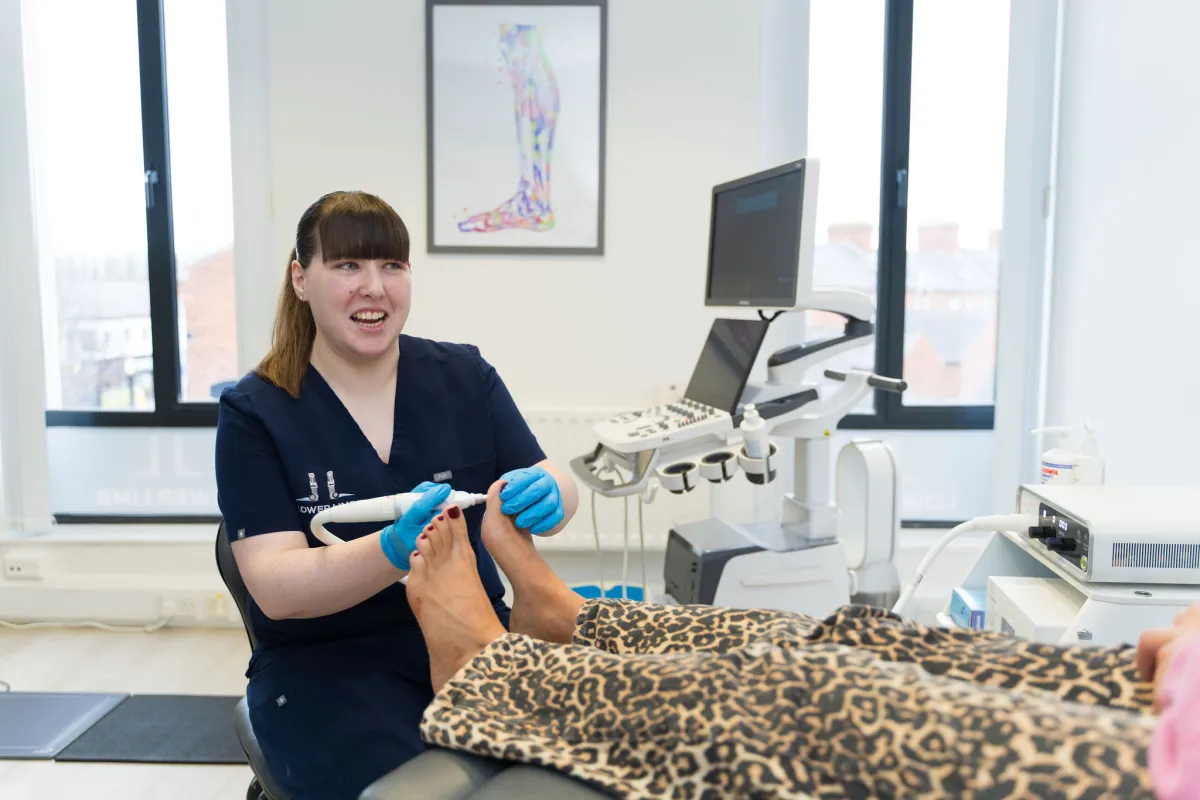
Swift uses a different mechanism. Precisely controlled microwave energy briefly heats the verruca tissue to trigger a localised inflammatory response. The immune system "wakes up" to the infected cells and clears the virus naturally. No broken skin, no dressings, no downtime.
Most patients clear with 3–4 sessions spaced 4 weeks apart. Chronic, large or mosaic verrucas may take longer.
Verruca Treatment (Swift)
20 mins · €170/session. Walk in, walk out. No dressings, no downtime, no activity restrictions.
Frequently asked questions
Should I just leave it and hope it goes away?
Some verrucas do clear on their own, typically within months to years. If yours isn't painful, isn't growing, and doesn't bother you, watchful waiting is reasonable. If it's spreading, painful, or you've had it more than 6 months, treatment makes sense.
Are over-the-counter treatments worth trying?
Salicylic acid preparations are the main OTC option and can clear simple, small, recent verrucas. They take weeks of consistent application and work less well for larger, deeper, or mosaic lesions. If you've tried OTC for 8–12 weeks without progress, switching to specialist treatment is sensible.
Can I pass it to my family?
Verrucas spread via skin-to-skin contact and shared moist surfaces (changing rooms, swimming pools). Risk is low to family in normal home contact, but covering the lesion in shared bathrooms, not sharing towels, and treating actively all reduce transmission.
How is verruca different from a corn?
Corns and verrucas can look similar but feel different. Corns hurt with direct pressure (push down). Verrucas hurt when squeezed (pinch sideways). Skin lines also tell the story: they pass through corns but stop or detour around verrucas. We can confirm clinically at your appointment.