Heel pain in Dublin
Heel pain is a symptom, not a diagnosis. There are at least six common causes, and they are treated differently.
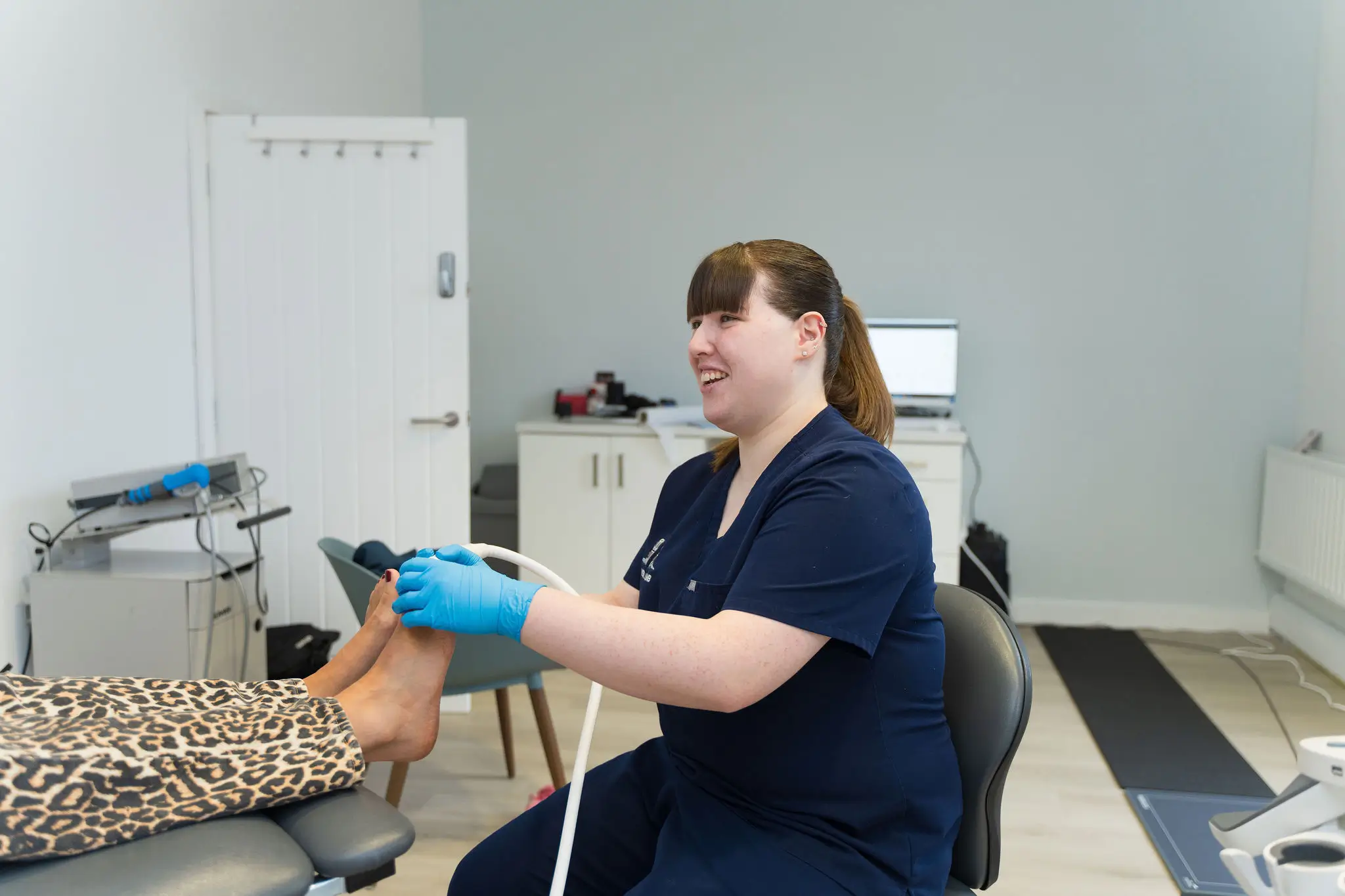
We use on-site diagnostic MSK ultrasound to confirm exactly which one you have before starting treatment, so you are not treating the wrong problem for months.
The reason heel pain so often fails to settle
Most heel pain gets labelled plantar fasciitis by default, because it is the most common cause. The problem is that several other conditions produce very similar symptoms, and each needs a different treatment.
A calcaneal stress fracture needs load taken off it. A tendinopathy needs graded loading. A heel fat pad problem needs cushioning and offloading. A nerve entrapment does not respond to any of the standard heel treatments. Treat the wrong one and the pain simply continues.
This is why we diagnose before we treat. On-site MSK ultrasound lets us look directly at the tissue and confirm the source of the pain in the same appointment, rather than working through treatments by trial and error.
The common causes of heel pain
Where the pain sits, and how it behaves, points to the cause. Confirming it is what matters.
Plantar fasciitis
The most common cause. Sharp underside-of-heel pain, worst on the first steps in the morning.
Read the guideInsertional Achilles tendinopathy
Pain at the back of the heel where the Achilles meets the bone. Often stiff and sore first thing.
Read the guideHeel fat pad syndrome
Deep, bruise-like pain in the centre of the heel, worse barefoot on hard floors. Frequently mistaken for plantar fasciitis.
How we assess itCalcaneal stress fracture
Bone-stress injury from repetitive load, common in runners. Pain on squeezing the heel bone. Needs a different pathway entirely.
Read the guideNerve entrapment (Baxter's nerve)
Burning or tingling heel pain that behaves differently to fascia pain and does not respond to standard heel treatment.
How we assess itSever's disease (in children)
Heel pain in active 8 to 14 year-olds at the growth plate. Self-limiting but needs load management and reassurance.
How we assess itWe confirm the cause, then treat it
Our Diagnostic Injury Assessment combines a full clinical examination, gait analysis and on-site MSK ultrasound. We measure the plantar fascia, image the Achilles insertion and check the surrounding tissue directly.
From there the treatment pathway is tailored to the actual diagnosis: custom orthotics where mechanics are driving the load, progressive loading rehabilitation for tendon problems, offloading for fat pad and stress injuries, and injection or shockwave therapy where it is genuinely indicated.
You leave the first appointment with a confirmed diagnosis and a plan, not a leaflet.
Diagnostic Injury Assessment
The right starting point for heel pain. 45 minutes, €160, includes MSK ultrasound and a defined treatment pathway.
Worth booking if any of these apply
The longer heel pain is left, the harder it tends to be to settle. Early, accurate diagnosis is the shortest route back to full activity.
The Dublin Heel Pain Guide
The six causes, a two-minute self-check, and what is safe to do in the first two weeks. Written by our clinical team, with the full treatment pathway in the free PDF.
Frequently asked questions
Why does my heel hurt most in the morning?
First-step morning pain that eases as you walk is the classic pattern for plantar fasciitis, but insertional Achilles tendinopathy and heel fat pad problems can behave the same way. The morning pattern narrows it down; it does not confirm the diagnosis on its own. That is what the ultrasound is for.
Is all heel pain plantar fasciitis?
No. Plantar fasciitis is the most common cause, so it gets diagnosed by default, but heel pain can also come from the Achilles, the heel fat pad, a calcaneal stress fracture, nerve entrapment or inflammatory arthritis. Treating the wrong one is the single biggest reason heel pain fails to settle.
Do I need a scan for heel pain?
Not always, but imaging is what separates the causes with confidence. We use MSK ultrasound in the clinic to look directly at the plantar fascia, the Achilles insertion and the surrounding tissue during the same appointment, so you leave with a confirmed diagnosis rather than a guess.
How long does heel pain take to settle?
With an accurate diagnosis and targeted treatment, most people improve meaningfully within 6 to 12 weeks. Longstanding cases can take longer. The cases that drag on for months are usually the ones where the cause was never confirmed.
Should I keep running or training?
It depends entirely on the cause. A stress fracture needs load taken off it; a tendinopathy usually needs graded loading, not rest. This is exactly why the diagnosis has to come first, and why generic advice to rest or to push through can both be wrong.