Plantar Fasciitis
The most common cause of heel pain, but it isn't the only one.
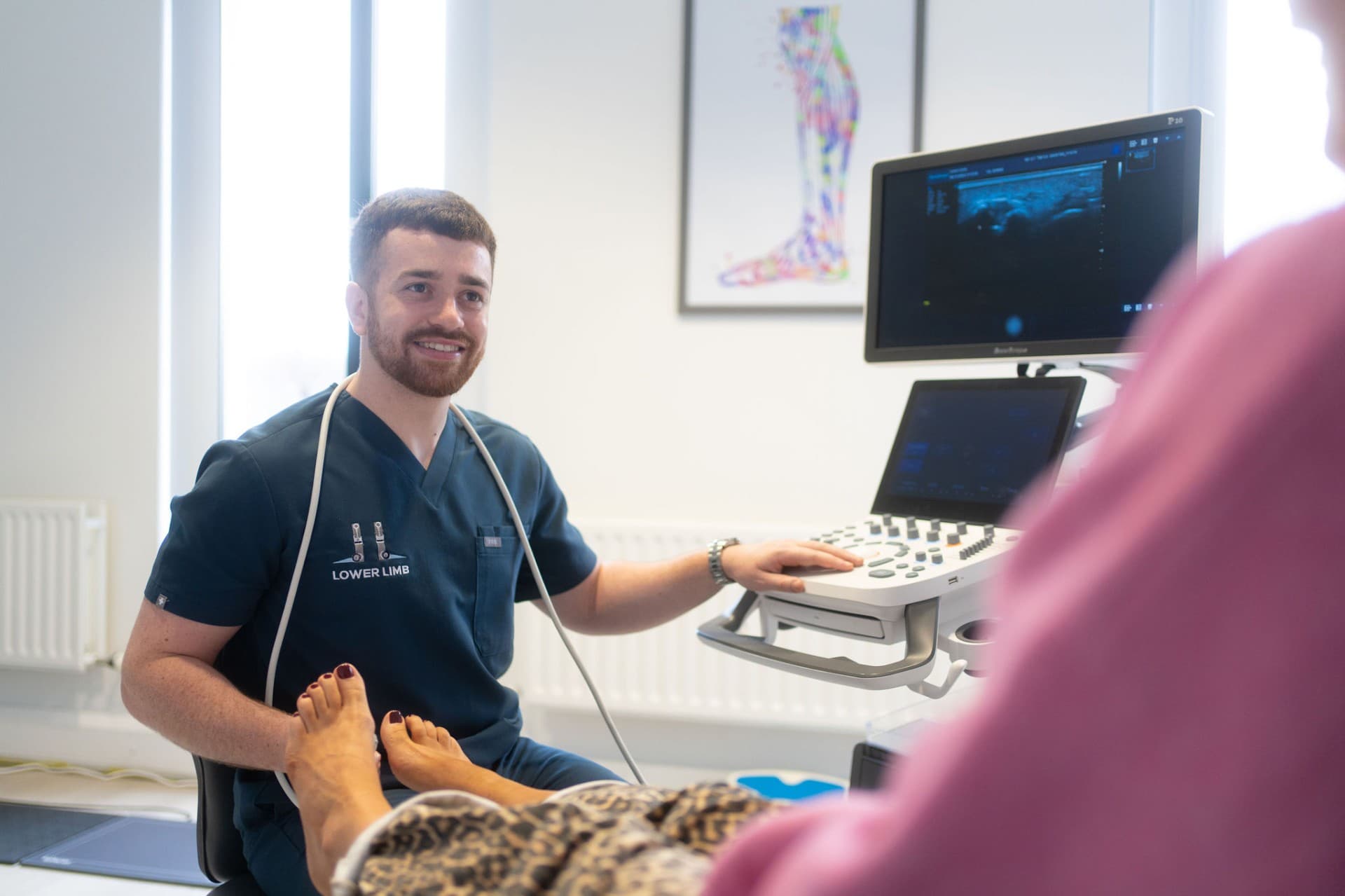
On-site diagnostic MSK ultrasound lets us confirm the diagnosis with certainty before starting treatment. Custom orthotics from our own lab when biomechanics need correction.
What plantar fasciitis is, and what it isn't
The plantar fascia is a thick band of connective tissue running along the underside of the foot from heel to forefoot. It supports the arch and absorbs load with every step. When it becomes irritated or degenerates at its insertion on the heel bone, the result is plantar fasciitis (more accurately "plantar fasciopathy").
The classic presentation: sharp pain in the underside of the heel, worst with the first few steps in the morning or after sitting, easing as you walk it off, then returning after prolonged activity.
But not all heel pain is plantar fasciitis. Heel pain can also come from a fat pad injury, calcaneal stress fracture, nerve entrapment, retrocalcaneal bursitis, or inflammatory arthritis. Treating the wrong condition is why many heel pain patients fail to improve. This is why we use diagnostic ultrasound before committing to a treatment pathway.
Common symptoms
We confirm the diagnosis before we treat it
Plantar fasciitis is overdiagnosed. The symptoms overlap with several other conditions, and treating the wrong problem is why many patients fail to improve with generic care.
Our Diagnostic Injury Assessment uses on-site MSK ultrasound to image the plantar fascia directly. We measure thickness, look for tears or fluid, and confirm the pain source. We combine this with clinical examination, gait analysis, and biomechanical assessment to build a complete picture.
Treatment pathway is then tailored: orthotics if mechanics are driving the load, exercise rehabilitation, footwear advice, and, where indicated, injection therapy or shockwave referral.
Diagnostic Injury Assessment
The right starting point if you have heel pain. 45 minutes, €160, includes MSK ultrasound and a defined treatment pathway.
How we treat confirmed plantar fasciitis
Once the diagnosis is confirmed, treatment is targeted to your specific findings. Most patients respond well to a combination of mechanical correction and progressive loading.
Custom 3D-Printed Orthotics
Where biomechanics are driving the load on the fascia, custom orthotics manufactured at our own Réalta Labs reduce strain and support healing.
Learn moreExercise Rehabilitation
Progressive loading exercises (particularly heavy slow resistance for the calf and intrinsic foot muscles) are well-evidenced for plantar fasciopathy.
Learn moreFootwear & Activity Advice
Specific guidance on supportive footwear, training load management, and surfaces, particularly relevant for runners and standing occupations.
Learn moreInjection Therapy / Shockwave
For chronic cases that haven't responded to first-line treatment, ultrasound-guided injection therapy or shockwave can be considered (referral pathway as needed).
Learn moreFrequently asked questions
How long does plantar fasciitis take to recover?
Recovery varies widely. With accurate diagnosis and targeted treatment, most patients see meaningful improvement within 6–12 weeks. Chronic cases (6+ months) often respond more slowly and may require additional treatment modalities.
Should I rest or keep moving?
Complete rest rarely helps. The fascia responds to graded loading. Reducing aggravating high-impact activity while introducing specific rehabilitation exercises is generally the right approach.
Are heel cushions enough?
Heel cushions can ease symptoms briefly but don't address the underlying mechanical issue. If your biomechanics are driving the problem, custom orthotics correct the cause rather than masking the symptom.
Do I need a steroid injection?
Not as a first-line treatment. Steroid injections can give short-term relief but evidence on long-term outcomes is mixed, and there's a risk of fascia rupture if used excessively. We consider injections where conservative care has failed and the pain is significantly affecting function.