Achilles Tendinopathy
The Achilles is the largest tendon in the body, and one of the most commonly injured.
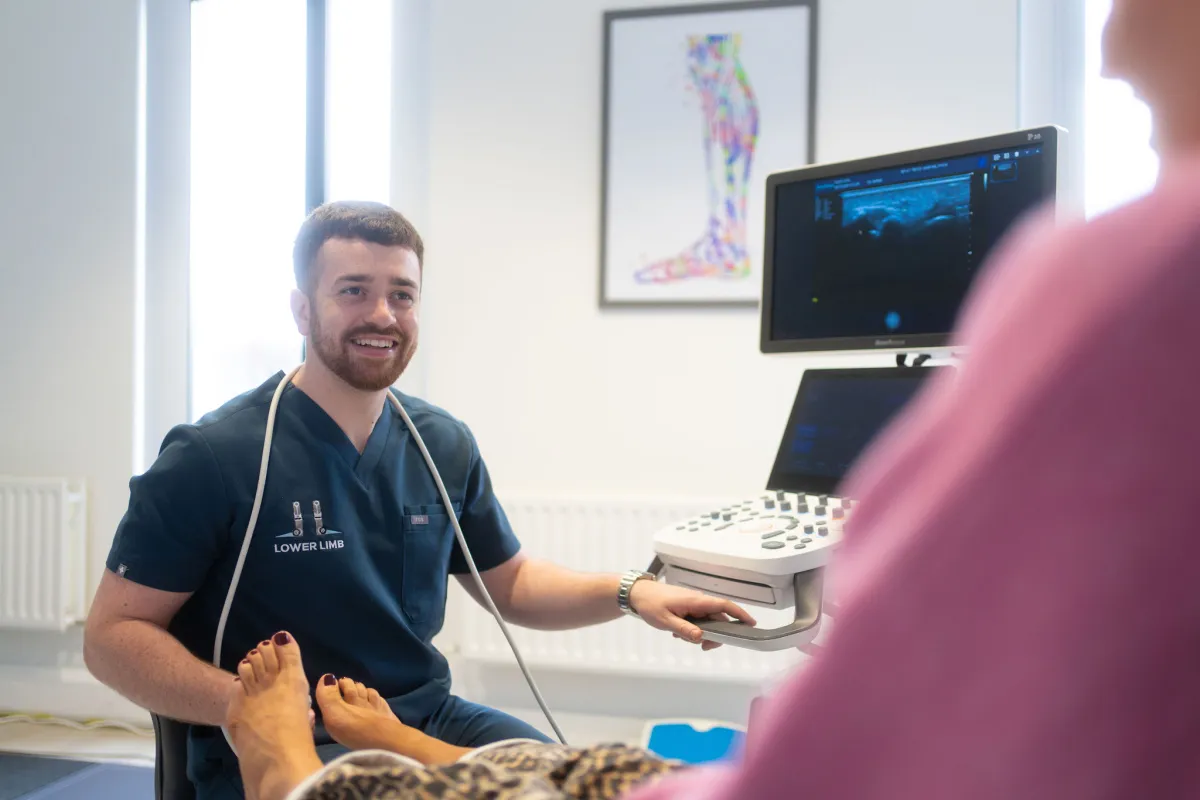
Diagnostic ultrasound on-site to confirm whether you have tendinosis, partial tear, or paratenonitis, because each requires different treatment.
Mid-portion vs insertional: different conditions, different treatment
Achilles tendinopathy is degeneration of the Achilles tendon caused by repetitive load that exceeds the tendon's capacity to recover. It comes in two main forms:
- Mid-portion tendinopathy: pain and thickening 2–6cm above the heel insertion. Most common form. Responds well to progressive loading rehab.
- Insertional tendinopathy: pain at the heel where the tendon attaches to the calcaneus. Often associated with a Haglund's deformity. Treatment differs meaningfully: lifts and footwear modification matter more, aggressive stretching can worsen it.
On top of this, ultrasound may reveal partial tears, intrasubstance splits, or fluid in the paratenon (paratenonitis), each of which changes the treatment plan.
Common symptoms
Imaging changes the plan
Treating Achilles pain without imaging is guesswork. Loading protocols suitable for a tendinosis can be the wrong choice for a partial tear. Stretching that helps mid-portion tendinopathy can aggravate insertional disease.
Our Diagnostic Injury Assessment includes on-site MSK ultrasound. We visualise the tendon directly to confirm the diagnosis and stage. We then build a loading programme that matches both the tissue state and your activity goals.
Diagnostic Injury Assessment
45 minutes · €160. Includes ultrasound imaging of the Achilles tendon, gait analysis, and a defined treatment pathway.
How we treat Achilles tendinopathy
Progressive Loading Rehab
Heavy slow resistance and eccentric loading remain the most evidence-based intervention for tendinopathy. We build a programme matched to your stage and goals.
Heel Lifts / Custom Orthotics
Particularly important for insertional disease. Heel raises reduce tension at the insertion. Custom orthotics where biomechanics are loading the tendon asymmetrically.
Activity Modification
Specific guidance on training load, not 'rest', but managed reduction in aggravating loads while loading is reintroduced therapeutically.
Injection Therapy / Shockwave
For chronic cases that haven't responded to loading rehab, ultrasound-guided injection therapy or shockwave can be considered.
Frequently asked questions
Can I keep running with Achilles tendinopathy?
Often yes, but with managed load. Tendons respond to progressive loading. Complete rest is rarely the right answer. We'll give you a specific running protocol matched to your tendon state and goals.
How long until I'm fully recovered?
Tendinopathy is slow to settle: typical recovery is 12+ weeks of consistent loading rehab. Chronic cases can take longer. Faster outcomes come from accurate diagnosis and a programme matched to your specific tendon state.
Do steroid injections help?
Generally no: steroid injections in or around the Achilles carry a real risk of tendon rupture and the evidence for benefit is weak. We typically avoid steroid for Achilles tendinopathy.
What about shockwave therapy?
Shockwave has reasonable evidence for chronic mid-portion tendinopathy that hasn't responded to loading rehab. It's a referral pathway from our assessment if appropriate.